
Research Computing Infrastructure
Dr. Martin designs, builds, and operates the self-hosted computing infrastructure behind his security research, AI inference, and expert witness work. Its purpose is twofold: to provide isolated, reproducible environments in which confidential code and case data can be analyzed entirely under his own control, and to supply the capacity to run compute-intensive analysis at scale. In practice that means rapid provisioning of segmented, multi-OS test networks; controlled handling of sensitive material; and experiments that can be torn down and repeated exactly.
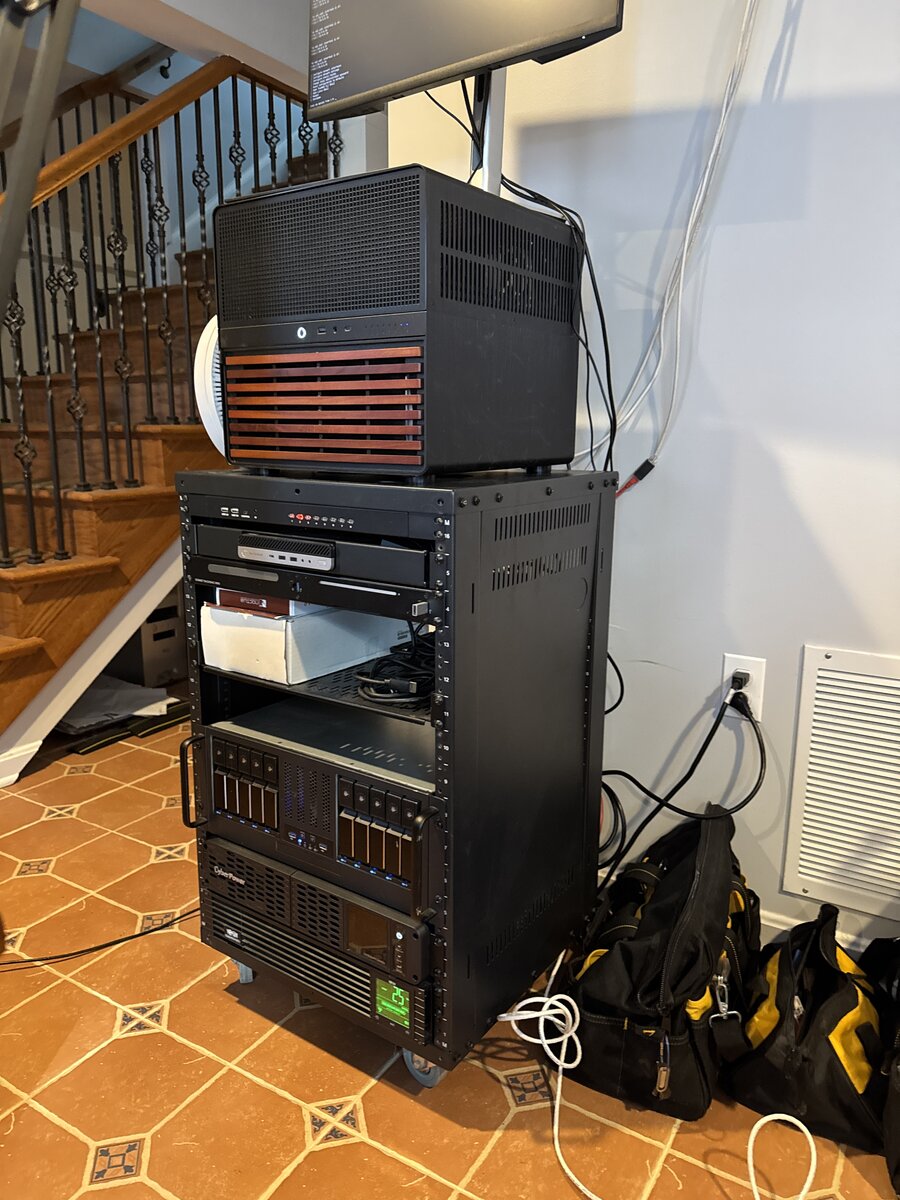
Consolidated virtualization platform
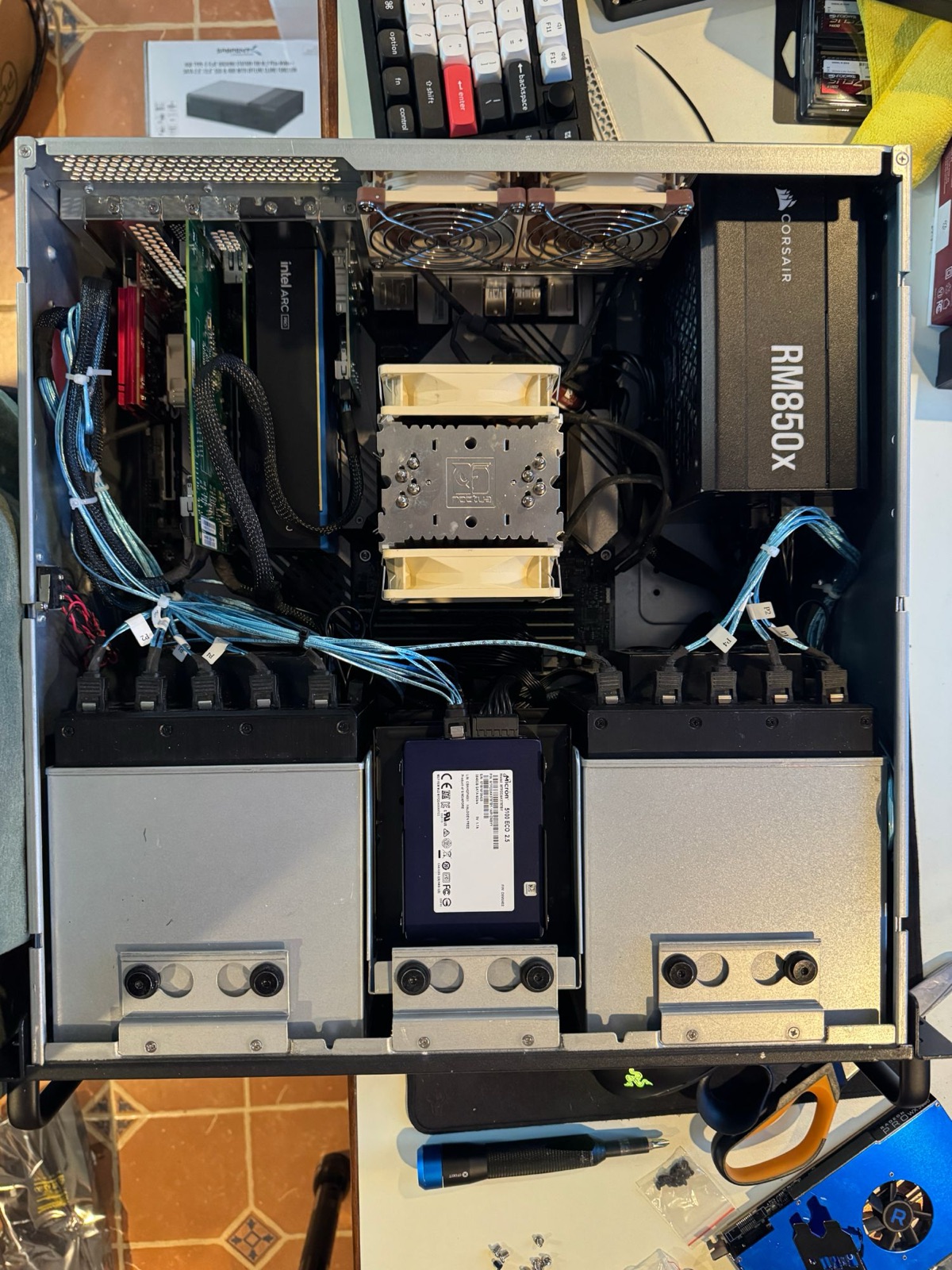
The environment runs on Proxmox, using PCIe passthrough to give dedicated virtual machines direct control of physical hardware: a firewall VM (OPNsense) owns its network interfaces, and a storage VM (TrueNAS) owns its disk controllers. This consolidates what was previously a rack of separate physical appliances into a single chassis without giving up the isolation or performance of dedicated hardware. The same consolidation is what made room for new capability: the platform shares a chassis with the LLM inference testbed used for local analysis of frontier-class language models. Beyond this environment, Dr. Martin built a Proxmox cluster for his laboratory at Johns Hopkins University and operates a second cluster for AI agent workloads.
Storage and data integrity
Primary storage is high-capacity ZFS with end-to-end data-integrity verification, snapshots, and replication. Checksumming at every layer means silent corruption is detected rather than propagated, a property that matters when the data at rest includes forensic images and case material that must remain demonstrably intact. Hot-swap drive cages keep pool maintenance and capacity changes routine.
Network segmentation and test networks
Custom-built OpenBSD and OPNsense network appliances provide deep packet inspection, traffic shaping, and segmentation. Segmentation is what turns the infrastructure into a research instrument: suspect firmware, malware samples, and multi-OS test environments run on isolated network segments that can be created for an investigation and destroyed when it ends, with sensitive material never crossing onto general-purpose networks.
Availability
The rack runs on conditioned, battery-backed power, and storage replication provides recovery points for the systems and data behind active casework.